
Introduction
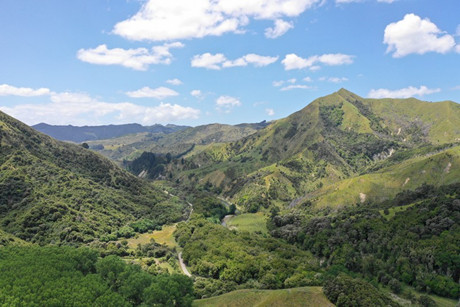 Tāne’s Tree Trust, in collaboration with Dame Anne Salmond and the Longbush Ecological Trust and other partners including Trees That Count, has planted over 20 seed islands at Waikereru Ecosanctuary, inland of Gisborne. This is the first step in demonstrating a cost-effective, practical method to encourage regeneration of native forest across marginal, erosion-prone pastoral hill country at Waikereru, typical of the Tairāwhiti region.
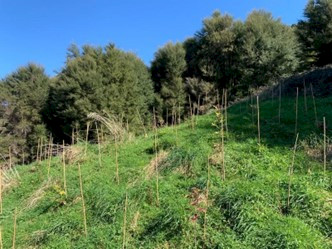 A wide-open planted gap dominated by rank grass within the existing scrub vegetation at Waikereru Ecosanctuary, Tairāwhiti.The project is funded by the Lotteries Board with support from the founders of Waikereru, Anne and Jeremy Salmond, Trees That Count, research associates from Manaaki Whenua, NZ Landcare Trust, and Waimata River restoration landcare group. Nursery seedlings for the seed island are funded by Trees That Count (TTC). The planting site at Waikeruru Ecosanctuary has been registered as a TTC planting site and sample plots established to monitor early performance.
Fieldwork in the second year
As with Year 1 seed island plantings, the lower slopes along the base of the steep hill country of Waikereru were selected within the existing kānuka shrubland for the Year 2 seed islands. The aim was to locate seed islands on the lower slopes where there was the better soils, moisture retention and shelter from regenerating kānuka to maximise performance of planted natives compared to the upper slope land use classes.
Seedlings supplied by the local nursery, Native Plant Nursery, comprised 500 native tree and shrub species including tītoki, makomako, karamū, karaka, kahikatea, kohekohe, rewarewa, northern rātā, ngaio, kōhūhū, tōtara, whauwhaupaku, kōwhai and puriri. Species were randomly allocated across the 11 seed islands but ensuring all seed islands had a sample of all species.
Monitoring of each of the seed islands has followed the plot based methods used by Tāne’s Tree Trust and Trees That Count to record survival, height and plant vigour by species, and note any injurious agents such as browsing.
Preliminary results
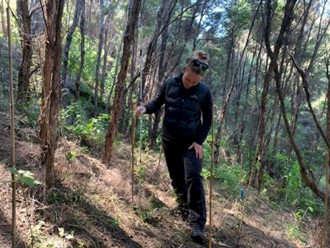 Undertaking the baseline monitoring of the latest June 2023 planting at Longbush Waikereru, Tairāwhiti. Note the light ground cover and limited species and diversity in the understory, typical of what is found in the dense kānuka dominated stands.There was very good survival across all species and overhead canopy cover categories (shade, partial cover and gap) at over 80%. Eight of the species of the 15 planted had 100% survival one year after planting for all overhead canopy cover categories. This included the trees tītoki, kahikatea, kohekohe, northern rātā, tōtara and puriri, and the shrubs or smaller trees karamū and ribbonwood. Only kōwhai had consistently lower survival in all canopy cover treatments.
Three species have equalled or exceeded an average 1m in height 12 months after planting, particularly when planted on the open exposed sites – black beech, ribbonwood and puriri. Puriri planted in the partial shade gaps were on average close to 1.3m high one year after planting.
The best species in terms of increased height growth was black beech, rewarewa, ngaio, ribbonwood and puriri. The species with a decrease in height were kohekohe and whauwhaupaku (five-finger). Interestingly, tōtara, which is one of the more shade intolerant podocarp species, had best height growth only in the gap sites, likely due to the increased light.
While plant vigour score is subjective, it has proven to be a useful measure of plant performance in planting trials for many years. One year after planting, five species – kahikatea, kōhūhū, ribbonwood, tōtara and puriri – had near excellent plant vigour scores across all canopy cover treatments. The poorest performing species in terms of plant health were makomako (wineberry), karamū and whauwhaupaku (five-finger) with vigour scores below 3. Rewarewa, rātā, kōhūhū, ribbonwood, tōtara and whauwhaupaku had slightly higher vigour scores in the shade plots which may indicate that the increased shelter benefitted the visual health of these species.
 Ongoing monitoring and maintenance
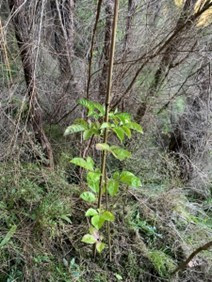
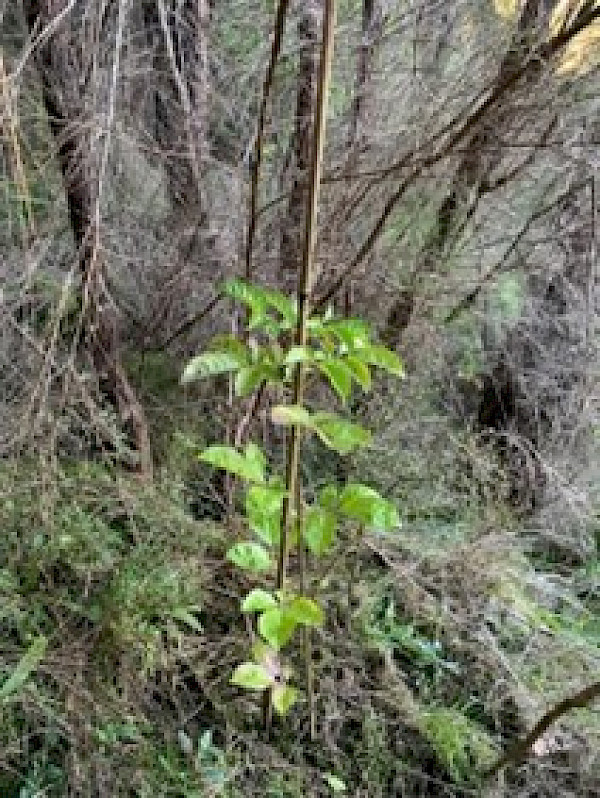
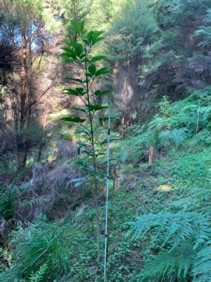 Substantial growth was recorded with some planted native species, especially puriri, in excess of 1m growth in the first year after planting in a partially shaded canopy gap (above). The puriri below is healthy with lower growth due to the full shade site.As with the first-year assessment, a full remeasurement of both the 2022 and 2023 planted seed islands will be undertaken in late 2024.
Maintenance led by the Ecoworks team has been kept up to a high standard and has included:
- Continued pest animal control to reduce damage by browsing animals such as possums, goats and deer.
- Possum chew card indices were also used after planting along with traps including A24s, AT220s and possum feracol bait stations deployed across Waikereru, along with new mustelid and cat traps.
- Minimal weed control has been required including in the open sites where dense exotic grass and herbs species did not eventuate and compete with the planted natives.
Project updates related to this project have been published in the Tāne’s Tree Trust newsletter (PDF, 3.50 MB).
For further information contact [Enable JavaScript to view protected content]