
The Patrons and Trustees come from a variety of scientific, forestry, nursery, legal and farming backgrounds. All are top people in their fields.
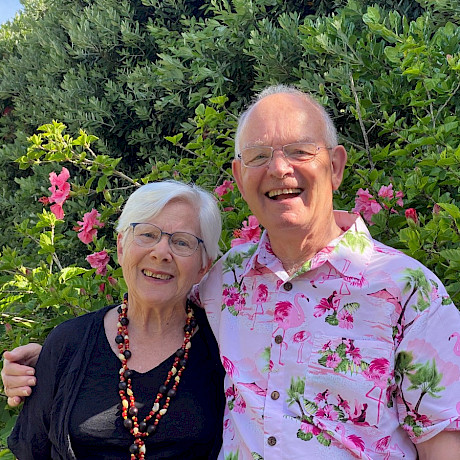
Andrew & Mary McEwen
ONZM PhD / D.Phil
Patrons
Andrew & Mary McEwen became patrons for Tāne’s Tree Trust in early 2022. Mary McEwen is a retired professional ecologist and has published four books, including a biography of her father, scientist and conservationist Charles Fleming. Andrew McEwen is a professional forester and former Trustee of Tāne’s Tree Trust between 2007 and 2012. Having joined NZIF in 1967, Andrew has been a registered forestry professional since 2000. He served on the NZIF Council for 11 years, with four years as Vice President and six years as President. He has been a member of the NZIF Registration Board since 2016 and chaired the NZIF Foundation from 2011-2021.
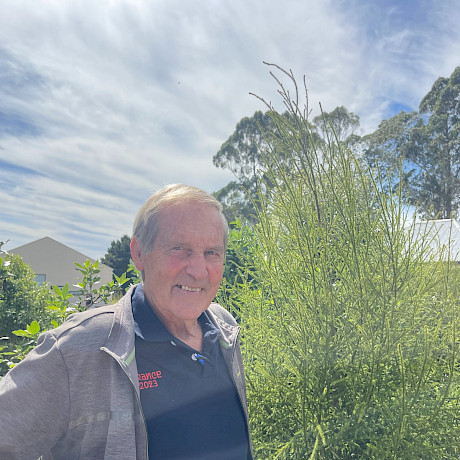
Peter Berg
ONZM
TTT Chairman
Past President of the NZ Forest Owners Association for 12 years, Past President and Fellow of the NZ Institute of Forestry and a former member of the SCION (NZ Forest Research Institute) and Auckland Conservation Boards, Peter is presently the Chair of the NZ Branch of the Commonwealth Forestry Association and a recent member of the executive committee of NZ Farm Forestry Association where he is still actively involved in a number of capacities. Peter has wide ranging interests in many aspects of NZ forestry and has jointly authored two books on New Zealand’s forest history.
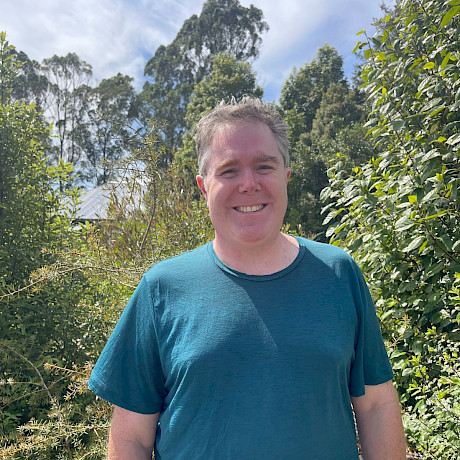
David Horgan
BSc Plant Biotechnology University of Otago and Studied at Massey University
TTT Treasurer
I have a science background specialising in plant physiology and am driven by a commitment to environmental stewardship and supporting people.
Most of my career has been as a research scientist with Plant Protection Chemistry NZ, an independent Rotorua-based research company focused on improving the sustainable use of pesticides and herbicides. My work centred on understanding and optimising plant–agrichemical spray interactions across the horticulture, agriculture, and forestry sectors.
This research contributed to major projects addressing challenges such as Psa in kiwifruit, myrtle rust, and kauri dieback. Over the years, I have collaborated with a wide range of clients, including chemical companies, grower groups, farmers, universities, and international partners.
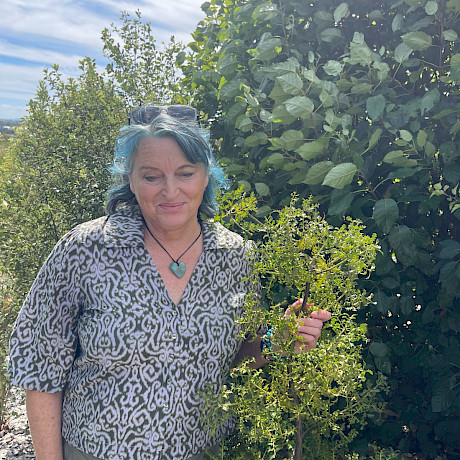
Jacqui Aimers
PhD in Forestry, Texas A&M University; BSc in Botany & Zoology, BSc (Hons) in Botany, University of Otago
Jacqui is a research analyst, forestry scientist and writer with over 30 years’ experience. She worked in Westland as a botanist during her university summers. After graduating, she did ecological work in Westland, and worked at the Forest Research Institute (FRI, now Scion). Jacqui then completed a PhD at Texas A&M University, with an emphasis in tree improvement – while working part-time for the Texas Forest Service. After returning to New Zealand, Jacqui worked for 10 years at FRI, in forest biotechnology. She subsequently set up Aimers Consulting in 2004, freelancing with a focus on forestry, sustainable land management and technical communications.
David Bergin
PhD
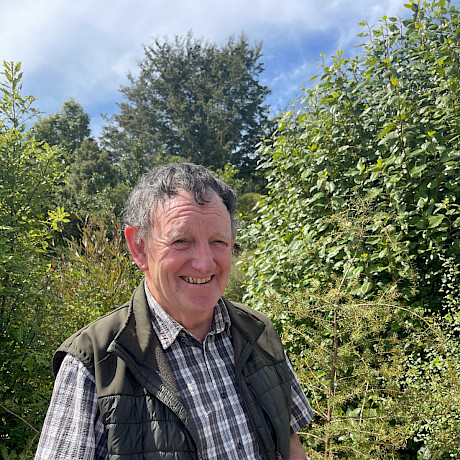
Dr David Bergin is a restoration ecologist and founding trustee of Tāne’s Tree Trust (TTT), with more than 45 years’ experience in native forestry research, establishment, and management in Aotearoa New Zealand. He is Director of Environmental Restoration Ltd and a former senior scientist with Scion (New Zealand Forest Research Institute), where he built a long career in applied research. David specialises in the establishment and early management of native forests, including species selection, planting design, and monitoring. His work promotes the integration of native trees into productive landscapes to deliver environmental, economic, cultural, and social outcomes. He has a long-standing focus on the planting, regeneration, management, and utilisation of tōtara, particularly on farmland. He is also a founding trustee of the Coastal Restoration Trust of New Zealand and a technical advisor to programmes such as Trees That Count. Through his role with TTT, he contributes to the development of science-based best-practice resources, including practical tools, monitoring systems, and the Trust’s native forest database and carbon modelling, supporting landowners and organisations to successfully establish and manage native forests at scale.
Michael Bergin
Dip. Forestry (For. Mgmt.), Registered Member of the New Zealand Institute of Forestry
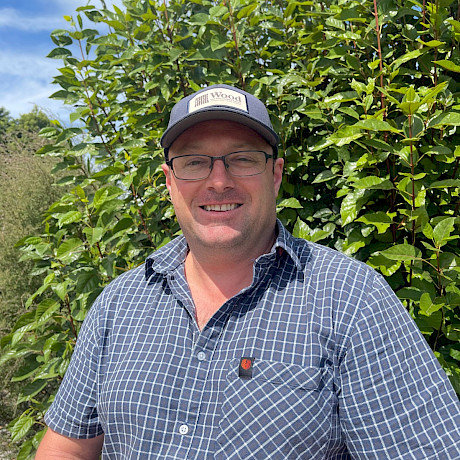
Mike is a director of Environmental Restoration (ERL) with 18 years of experience in environmental research and technical advisory roles working on a wide range of projects with councils, landowners, trusts and government departments. Mike is a registered forest advisor and specialises in setting up planting and weed control trials, monitoring of performance, managing databases and technical reporting across a range of indigenous plant ecosystems including forests, wetlands, geothermal landscapes and coastal dunes across New Zealand.
Ian Brennan
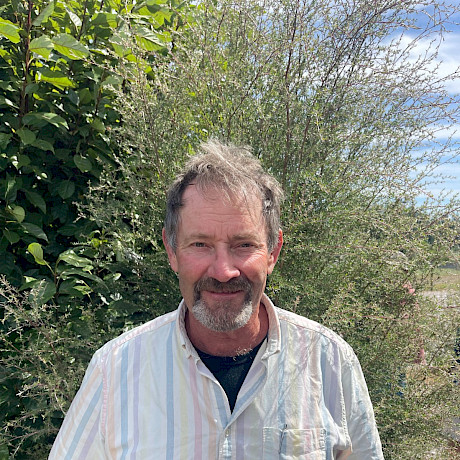
Ian came to drystock farming in 2006 after 22 years as a computer programmer and systems analyst. In 2007 he began experimenting with native plantings and now has 38 hectares of planted native forest, predominantly tōtara, at various ages and stages of management. He is learning the hard way that ongoing and regular silvicultural management is key to the successful production of high quality native timber.
Ian’s intention is to keep in pasture only those areas which are safe to drive over, with everything steeper being planted and managed as Continuous Cover Forestry. To facilitate management and eventual selective harvest, Ian invested in a network of tracks before planting. These provide safe vehicle access to and through the forested areas, making the property a popular reference site for people interested in native forest establishment, catchment protection and biodiversity enhancement.
Jon Dronfield
After 20 years of managing forests under sustainable legislation, Jon has retired from harvesting and timber production to embark on a new chapter. As a former forester and production manager for New Zealand Sustainable Forest Products, he dedicated his career to managing Forever beech products and championing ecologically sensitive, continuous-cover forestry. True to the adage “once a forester, always a forester,” Jon remains deeply connected to his love of the forest. He is currently exploring a mid-life change in direction, searching for new meaning and purpose, and waiting to see where the groves of life will draw him next.
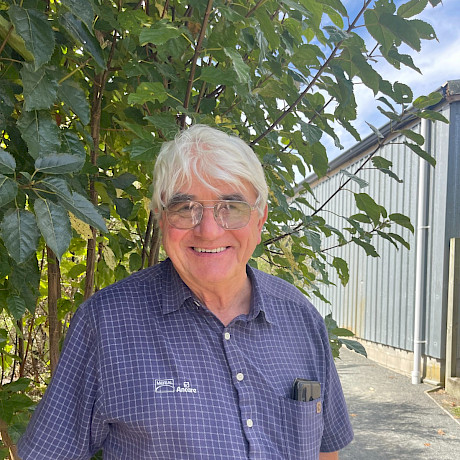
Rob McGowan
JP, M.Soc.Sc Waikato
Rob McGowan currently works for the Department of Conservation (DOC) and is the Amo Aratu for Nga Whenua Rahui (NWR). He was the founding Chair of the Kaimai-Mamaku Catchments Forum and is currently the Patron of the Forum.
Rob is an authority on rongoā Māori (traditional Māori medicine) and is well respected nationally for his work with and for the restoration of rongoā Māori practice in New Zealand. He was an expert witness to the Wai 262 Claim, and since the publication of the Tribunal’s Report, involved in its implementation. He continues to work as an advisor to numerous Government agencies, Māori tribal authorities and for a number of rongoā Māori related research and education initiatives.
In his current work, he is heavily involved in helping to build a bridge between Western Science and Matauranga Māori (traditional Māori knowledge) in conservation management. Rob has been a long time member of the Bay of Plenty Conservation Board and past Chairman.
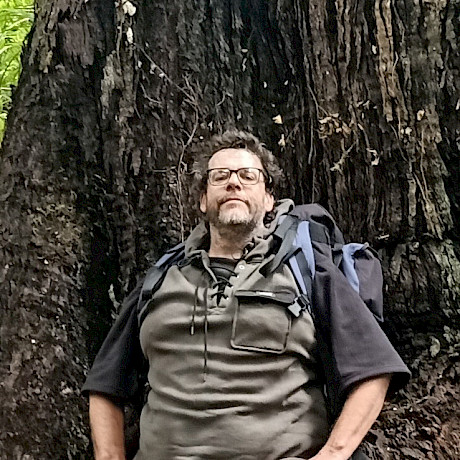
Wayne O’Keefe
Having moved to Aotearoa, NZ in 2001, Wayne quickly developed a passion for our unique biodiversity. Since starting his contracting business in 2002, he has been fortunate enough to work in the community conservation space supporting and guiding conservation groups and landowners to achieve their conservation goals. This has helped him to develop a broad understanding of ecological processes, especially coastal and forest ecology and the challenges we face in caring for them. He is a self-confessed native plant geek and has a particular interest in natural regeneration and native forest establishment. Wayne has held roles with the QEII National Trust, Trees that Count, Whakātane Kiwi Trust, Kōkako Ecosystem Expansion Programme (KEEP) and Bay Conservation Alliance.
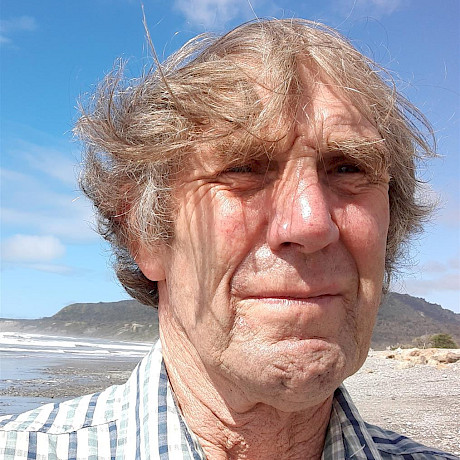
Michael Orchard
B Sc. (Botany and Zoology), B (Forestry) Sc., Graduate Diploma of Learning and Teaching. University of Canterbury.
Michael has long been passionate about NZ’s native forests, biodiversity, wildlife and trees of every kind. He has been a member of several environmental groups and his early forestry career has included placements in Eyrewell, Kaingaroa, Gisborne District and Rotorua Forests, including management plan preparation for the Whirinaki Forest (in the Ureweras).
He then moved to the West Coast filling roles as a Senior Indigenous Forester for the NZ Forest Service, then a Senior Conservation Officer for the Department of Conservation (including mining site restoration and nursery management). A particularly rewarding role was a period as the Significant Natural Area, Landowner Liaison Manager, for the Grey District Council.
He also spent 25 years managing his own business ‘The Tree Centre’, as an Environmental, Conservation and Forestry Advisor (its motto – ‘Harmony With Nature’). As well as a small tree crops nursery, he enjoyed working in his forestry block, including a range of production exotics and tall indigenous forest. The latter includes a recently dedicated QEII Covenant – the “Orchard Memorial Kahikatea Forest and Wetland.”
To keep his mind active he has served on the Councils of the NZ Institute of Forestry and the Farm Forestry Association (and is local West Coast chairman of both). Currently he is on the Farm Forestry Executive Committee, its Indigenous Forests Section, plus the FFA/FOA Environmental Committee as well, and is very much looking forward to being immersed in “natives” again in TTT.
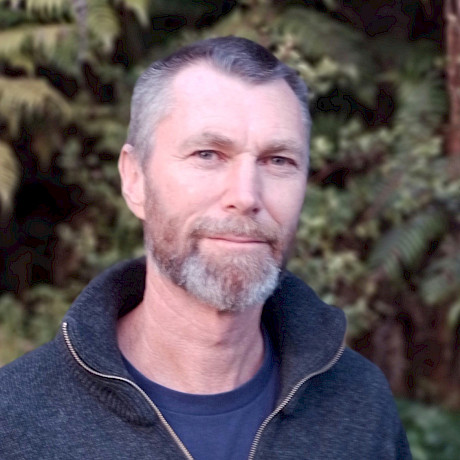
Paul Quinlan
BLA (Hons) and registered member of the NZ Institute of Forestry (NZIF)
Paul is a Landscape Architect, involved with land use planning and management. He has a professional interest and expertise in sustainable indigenous forestry and Close-to-Nature Forestry. He has prepared sustainable harvest permits and plans under the Forests Act and managed low-impact selective harvests. He is particularly involved with activities and projects of The Northland Tōtara Working Group (NTWG), and authored: A Practical Guide to Managing Tōtara on Private Land.
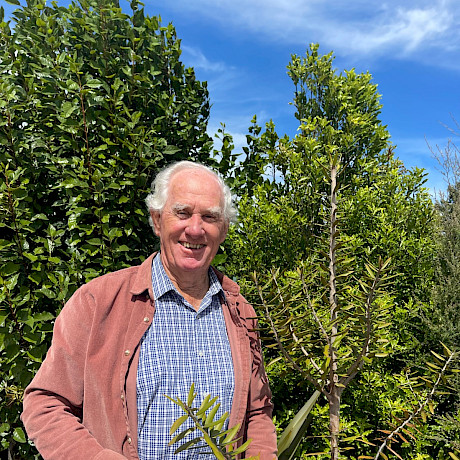
Warwick Silvester
ONZM, PhD
Emeritus Professor of Biological Sciences at University of Waikato. He has interests in plant nutrition and productivity and has published papers on nitrogen fixation, nitrogen cycling and tree physiology. He is the inaugural KuDos Lifetime Achievement Awardee in recognition of outstanding achievements in environmental research.