
Tāne’s Tree Trust
Donate Join Facebook
  • Home
  • Become a member
    • Application form
  • Projects
  • Resources
    • Questions and answers
    • Native Forest Toolkit
    • Native Plant Monitoring
    • Factsheets
    • Publications
    • Bulletins
    • Newsletters
    • Databases
    • Videos
    • Submissions
    • Other links
    • Tōtara publications & resources 
  • Species profiles
    • Black Maire
    • Hinau
    • Kahikatea
    • Kaikawaka
    • Kamahi
    • Kanuka
    • Kohekohe
    • Kowhai
    • Mangeao
    • Manoao
    • Matai
    • Miro
    • Pink Pine
    • Pohutukawa
    • Pukatea
    • Puriri
    • Rewarewa
    • Tanekaha
    • Taraire
    • Titoki
    • Totara
  • News & events
    • Newsletters
    • Annual General Meetings
    • Philosophical Forest
  • About us
    • Strategy
    • Trustees
    • Management committee
    • Northland Totara Working Group (NTWG)
  • Contact us
  1. Home
  2. Projects
  3. Tāne’s Tree Trust Technical Handbook

Tāne’s Tree Trust Technical Handbook

Project status: Completed

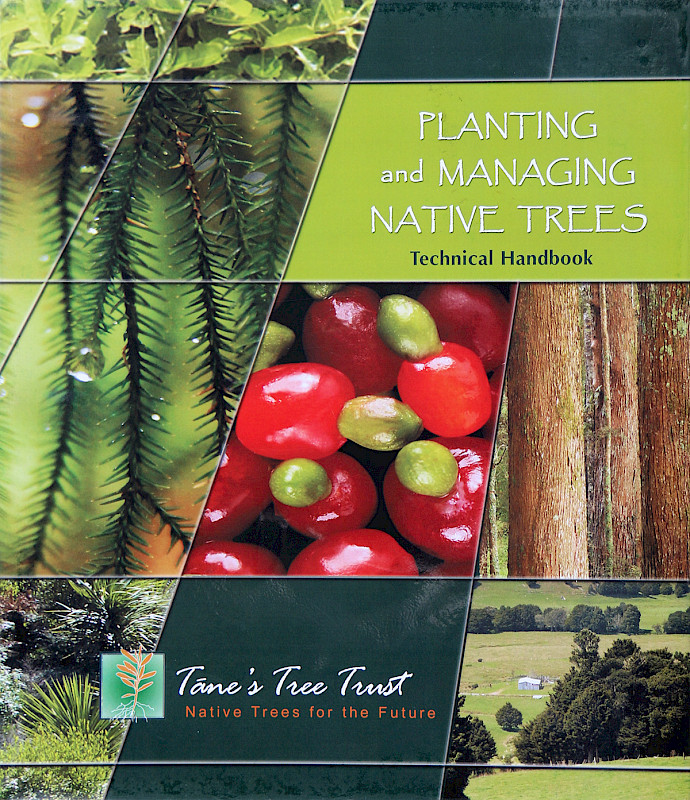
Over several years TTT has been working on the production of the Technical Handbook entitled Planting and Managing Native Trees. Information covered includes the ecological principles of restoration and planting New Zealand indigenous trees and shrubs as well as providing practical guidelines for planting and managing natives.

Each section contains stand-alone technical articles written in a user-friendly style and fully illustrated in colour. The articles present referenced material and are peer-reviewed. New sections and articles will be uploaded as they become available.

Background

In consultation with landowners, local community groups and agency representatives attending Tāne’s Tree Trust (TTT) workshops at Hikurangi (Northland) and Kaukapakapa (north of Auckland), it was agreed that the Trust should collate historical and recent information in the form of a handbook that is easy to update.

The handbook is intended to be a comprehensive reference guide that can be updated regularly in order to disseminate information about best-practice methods for the establishment and management of indigenous plantations. It will be used at TTT workshops, seminars and field days, and as resource material for proposed tertiary courses on indigenous plantation forestry.

The project is managed by Tāne’s Tree Trust and has had funding and support from FITEC (Forest Industry Training and Education Council), the Ministry of Agriculture and Forestry’s Sustainable Farming Fund, and Tāne’s Tree Trust.

Contents of the Handbook

Completed

Sections with articles in the TTT Technical Handbook that are already published include:

Title page
Foreword
1. Introduction
1.1 Why do we need a Handbook?
1.2 How to use the Handbook?
1.3 Introducing Tāne’s Tree Trust
2. Objectives for establishing native trees
2.1 Objectives and strategies for planting
2.2 Options for establishing native trees
3. Cultural and historical perspective on planting natives
3.1 Nga Taonga o te Wao Nui a Tane – a cultural perspective
3.2 Native forests – an historical perspective
4. Requirements for establishing native trees
4.1 Physiological factors – trees and environment
4.2 Lessons from nature –using ecology to help grow native trees
5. Seed collection and propagation
5.1 Seeding of native trees and shrubs (yet to be published)
5.2 Eco-sourcing natives (yet to be published)
5.3 Choice of nursery method – container or open-ground
5.4 Establishment performance of native shrubs – a comparison of container and open-ground plants
6. Site selection
6.1 Key factors in site selection
6.2 Sites for planting native trees
7. Site preparation
7.1 Planting – getting started
7.2 Livestock and pest management
7.3 Preparing grass sites for planting – herbicides
7.4 Preparing gorse, broom and blackberry sites for planting natives
8. Planting and maintenance of natives
8.1 Planting techniques for natives
8.2 Planting patterns and density
8.3 Maintenance – weed control (yet to be published)
9. Planting and managing natives in riparian areas
9.1 Riparian margins – an introduction
9.2 Riparian planting for sediment, nutrient and pathogen management
9.3 Riparian planting for aquatic and terrestrial biodiversity
9.4 Riparian planting for native timber and multiple purposes
9.5 What is it with willows – pest, resource or opportunity for native forests?
10. Native tree plantations
10.1 Nationwide survey of planted native trees
10.2 Performance of planted native conifer trees
10.3 Performance of planted native hardwood trees
10.4 Performance of planted native shrubs
10.5 Carbon sequestration by planted native trees and shrubs
10.6 The Kauri 2000 Trust – plant a kauri – recreate a forest
10.7 Establishing a native production forest – Rewanui Forest Park, Wairarapa
11. Native tree plantations
11.1 Ecology and distribution of totara (yet to be published)
11.2 Establishing and managing plantations of totara (yet to be published)
11.3 Management of naturally regenerating totara on farms
11.4 Weaving resiliance into our farming landscapes with native forestry

Future

Proposed further sections and technical articles to be published when funding permits include:

12. Monitoring of planted natives
12.1 Monitoring performance of plantings
12.2 TTT native tree database project
12.3 Survey methods
12.4 Plot establishment
12.5 Tree measurements
12.6 Equipment requirements
13. Early management of natives
13.1 Silvicultural releasing
13.2 Stem selection
13.3 Pruning and thinning
14. Continuous Cover Forestry
14.1 What is Continuous Cover Forestry?
14.2 History of Continuous Cover Forestry
14.3 Implementing CCF for native forests
15. Wood quality and utilisation
15.1 Historical perspective
15.2 Wood quality of native trees
15.3 Current uses
16. Species
16.1 Kauri
16.2 Totara
16.3 Beeches
16.4 Hardwoods
16.5 Rimu
16.6 Tanekaha
16.7 Matai and miro…
16.8 Kanuka
17. Carbon
17.1 Managing planted forest for carbon sequestration
17.2 Permanent Forest Sink Initiative
18. Case studies
18.1 Northland Totara Working Group
18.2 Project Kahikatea
18.3 Trimble Foundation planting trials
18.4 Amakiwi
18.5 Mangatangi kauri
18.6 Others…

Sourcing the handbook and articles

PDF copies of articles are available on the Publications page.

  • Projects
    • Transitioning Exotic Forest to Native
    • Developing a functional supply chain and building local capacity for farm-tōtara in Northland
    • Native Forest for Resilient Landscapes (NFRL)
    • Indigenous Forestry Plantation Database
    • Indigenous Forestry Reference Database
    • Waikereru Ecosanctuary Seed Island Project
    • Accelerating landscape scale restoration of native forest
    • Valuing the provision of ecosystem services on private land
    • Pūniu River Care audit
    • Establishing Native Forests factsheet series
    • Normalising Native Forestry
    • Training Videos and Workshops for Best-Practice Restoration
    • Close-to-nature continuous cover forestry project
    • The planting native forests toolkit
    • Seed island vs seed orchard contract
    • O Tātou Ngahere ‒ Our Forest
    • A Practical Guide to Managing Tōtara on Private Land
    • Re-Measurement of Farm Tōtara Project
    • Our Forests Our Future
    • Adaptive management of coastal forestry buffers
    • Totara Industry Pilot Project (TIP)
    • Performance of open-ground and container-raised natives planted on hill country, Lake Taupo catchment
    • Tāne’s Tree Trust Technical Handbook
    • National survey of indigenous plantations for carbon accounting
    • Indigenous tree bulletin series
    • Review of existing uses and market opportunities for farm-grown totara in Northland
    • Landscape concept plan for afforestation of lowland Waikato hill country reserve
    • Northland totara riparian project
    • Pathways to code compliance for farm-totara timber
    • Monitoring Native Planting Programmes
    • Managing delays in planting natives due to Covid-19
    • TUR workshops for Growing Native Forests series
    • Tall Tree Booklet

Subscribe to our newsletter

Disclaimer: the contents of this website, including any links to other websites and resources, are not intended to be a substitute for specific specialist advice on any matter and should not be relied on for that purpose. Tāne’s Tree Trust shall not be liable on any ground for any loss, damage, or liability incurred as a direct or indirect result of any reliance by any person upon information contained or opinions expressed on this website or via any links to other websites or resources.

© 2026 Tāne’s Tree Trust • Website by RS

Tāne’s Tree Trust
  • Home
  • Become a member
    • Application form
  • Projects
    • Transitioning Exotic Forest to Native
    • Developing a functional supply chain and building local capacity for farm-tōtara in Northland
    • Native Forest for Resilient Landscapes (NFRL)
    • Indigenous Forestry Plantation Database
    • Indigenous Forestry Reference Database
    • Waikereru Ecosanctuary Seed Island Project
    • Accelerating landscape scale restoration of native forest
    • Valuing the provision of ecosystem services on private land
    • Pūniu River Care audit
    • Establishing Native Forests factsheet series
    • Normalising Native Forestry
    • Training Videos and Workshops for Best-Practice Restoration
    • Close-to-nature continuous cover forestry project
    • The planting native forests toolkit
    • Seed island vs seed orchard contract
    • O Tātou Ngahere ‒ Our Forest
    • A Practical Guide to Managing Tōtara on Private Land
    • Re-Measurement of Farm Tōtara Project
    • Our Forests Our Future
    • Adaptive management of coastal forestry buffers
    • Totara Industry Pilot Project (TIP)
    • Performance of open-ground and container-raised natives planted on hill country, Lake Taupo catchment
    • Tāne’s Tree Trust Technical Handbook
    • National survey of indigenous plantations for carbon accounting
    • Indigenous tree bulletin series
    • Review of existing uses and market opportunities for farm-grown totara in Northland
    • Landscape concept plan for afforestation of lowland Waikato hill country reserve
    • Northland totara riparian project
    • Pathways to code compliance for farm-totara timber
    • Monitoring Native Planting Programmes
    • Managing delays in planting natives due to Covid-19
    • TUR workshops for Growing Native Forests series
    • Tall Tree Booklet
  • Resources
    • Questions and answers
    • Native Forest Toolkit
    • Native Plant Monitoring
    • Factsheets
    • Publications
    • Bulletins
    • Newsletters
    • Databases
    • Videos
    • Submissions
    • Other links
    • Tōtara publications & resources 
  • Species profiles
    • Black Maire
    • Hinau
    • Kahikatea
    • Kaikawaka
    • Kamahi
    • Kanuka
    • Kohekohe
    • Kowhai
    • Mangeao
    • Manoao
    • Matai
    • Miro
    • Pink Pine
    • Pohutukawa
    • Pukatea
    • Puriri
    • Rewarewa
    • Tanekaha
    • Taraire
    • Titoki
    • Totara
  • News & events
    • Newsletters
    • Annual General Meetings
    • Philosophical Forest
  • About us
    • Strategy
      • Tāne’s Tree Trust Approach to Biosecurity Issues
      • Tāne’s Tree Trust Guidelines to Species Selection, Ecosourcing and Seed Collection
    • Trustees
    • Management committee
    • Northland Totara Working Group (NTWG)
      • Join NTWG
      • NTWG projects
      • NTWG publications & resources
      • NTWG newsletters
  • Contact us
  • Search...